KANTHA
Cloth, memory, repair, repetition.
The objects in this exhibit are available for purchase. The Institute finds this complicating.
LivRocks belongs to a friend of the Institute.
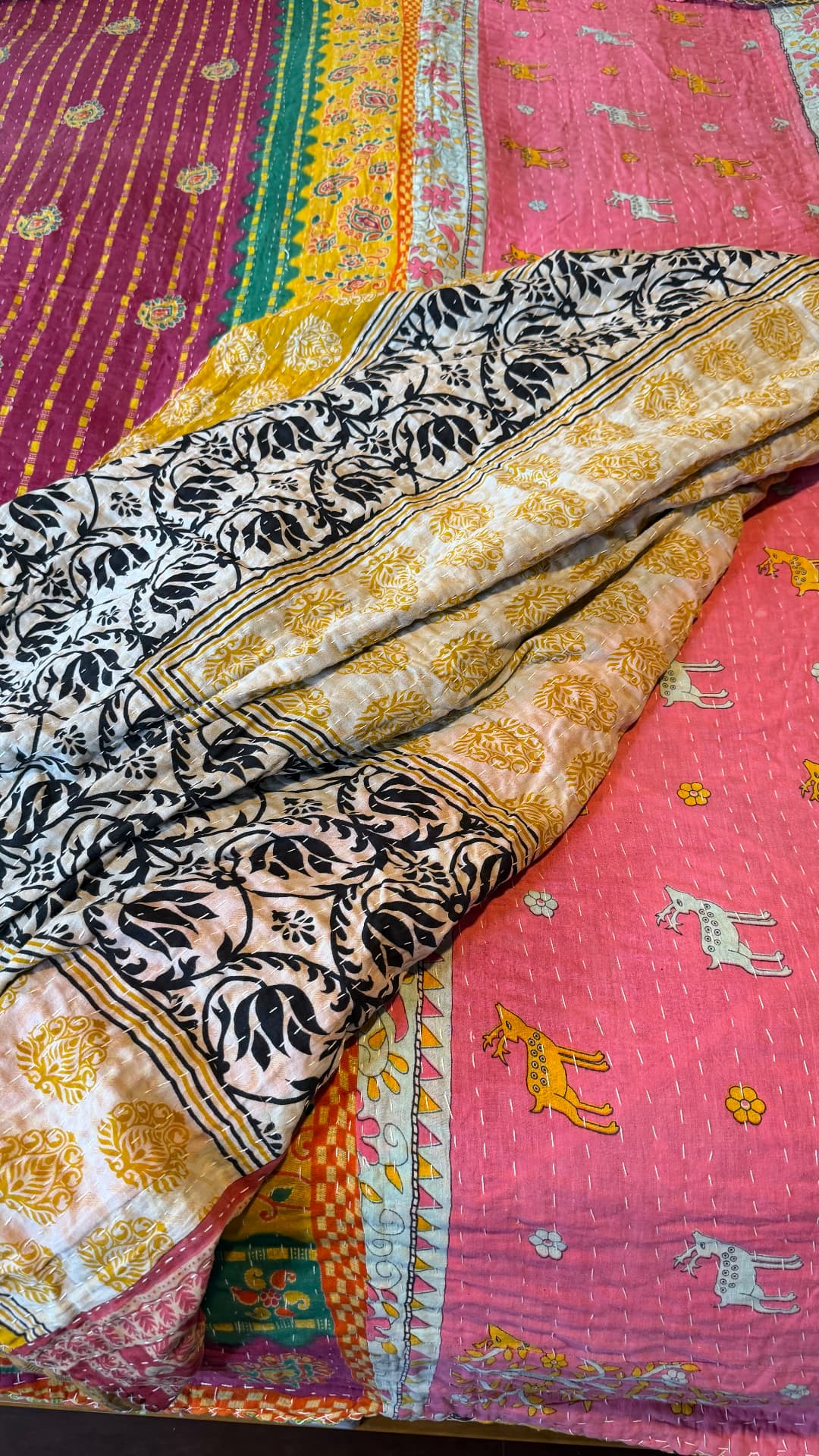
The Institute for Accidental Art presents its first visiting exhibit: a small study of Kantha, the stitched cloth of Bengal, and of the contemporary quilts that carry the tradition forward.
THE STITCH
Kantha is, at its simplest, a running stitch. The simplest stitch there is. Forward, back, forward again — a line of small, even dashes moving across cloth the way footsteps move across a field.
But in Bengal — the region that spans present-day Bangladesh and the Indian state of West Bengal — this simplest of stitches became something else entirely. Layer upon layer of worn cloth, softened by years of use, is stacked and then worked over with thousands upon thousands of these small stitches until the layers hold together as one. The stitch does not decorate the cloth so much as it transforms it: what was thin becomes substantial, what was fragile becomes durable, what was ending becomes beginning again.
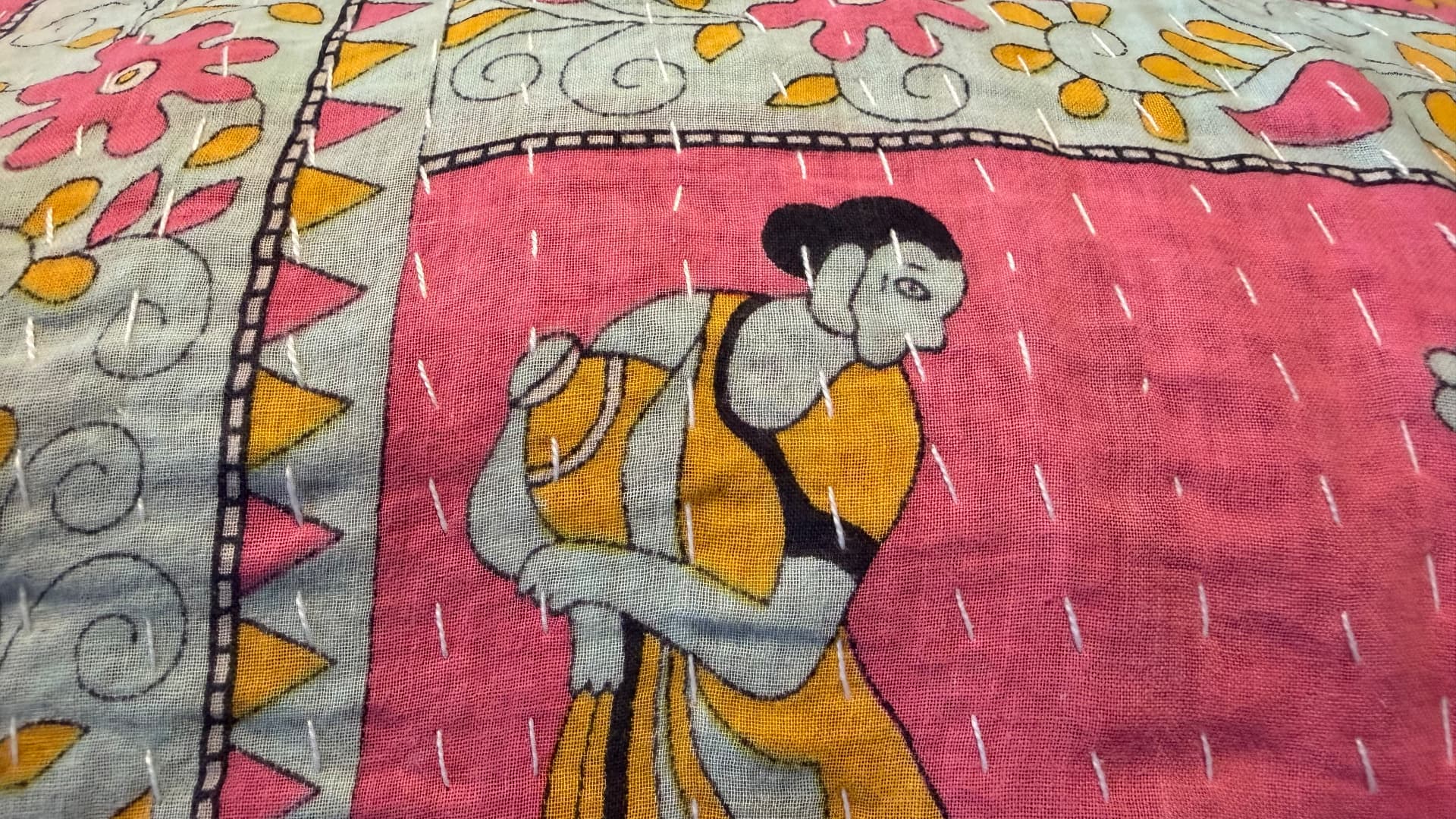
The hand that stitches is not embellishing. It is building.
REUSE AS METHOD
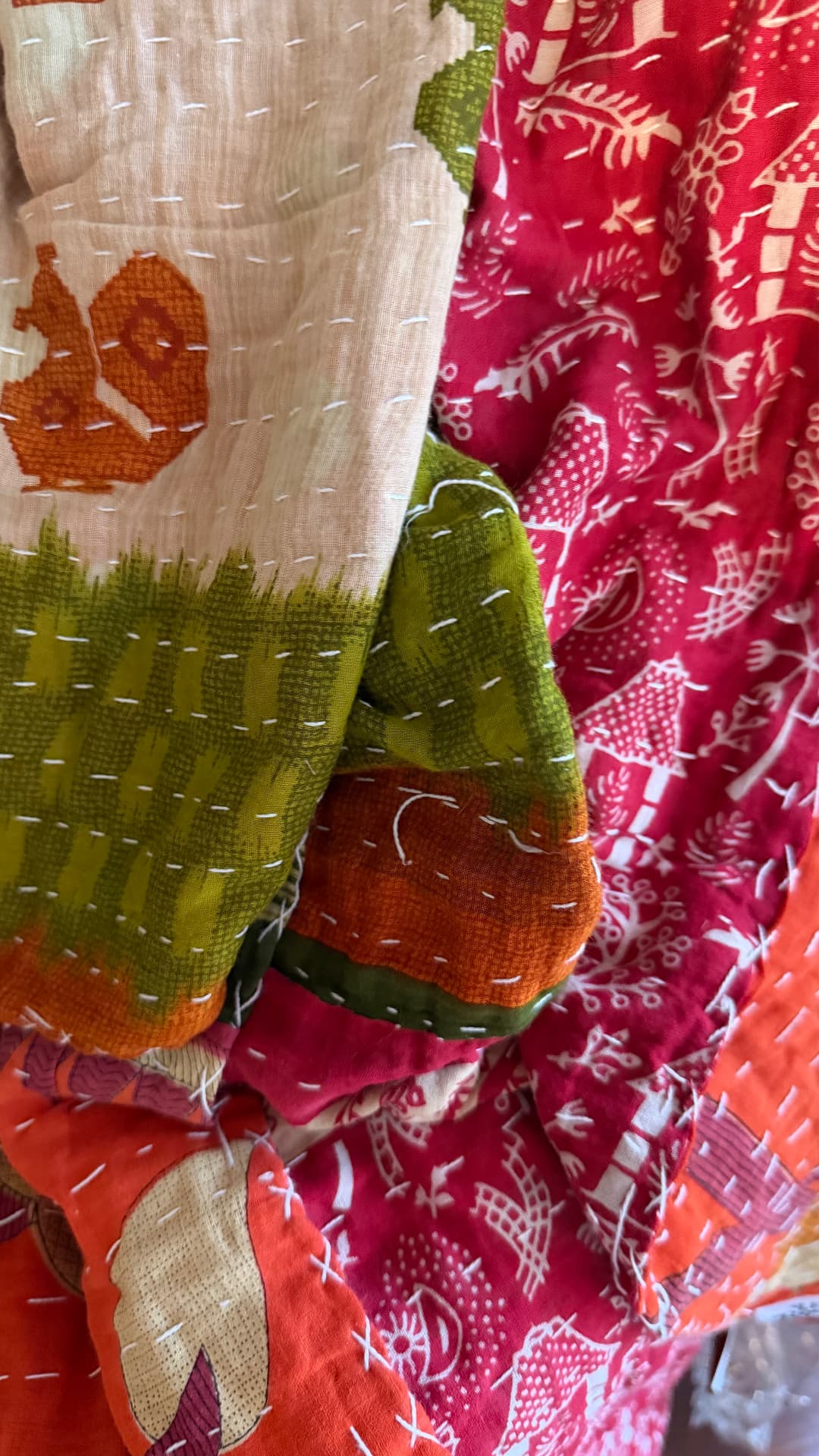
Traditionally, Kantha begins with cloth that has already lived a life. Worn saris, softened dhotis, textiles too thin to serve their original purpose but too valued — too beautiful, too remembered — to discard. These are layered, the softest and most worn placed at the center, and stitched together into something new: a quilt, a coverlet, a wrap for a child, a cloth for a ceremony.
Nothing is wasted. Nothing is thrown away. The cloth that covered a body becomes the cloth that warms a bed becomes the cloth that wraps a gift becomes the cloth that is stitched again into the next layer. Kantha is not recycling as we now use that word — it is something older and more fundamental: the refusal to let go of what has been useful, and the discovery that in not letting go, something new is made.
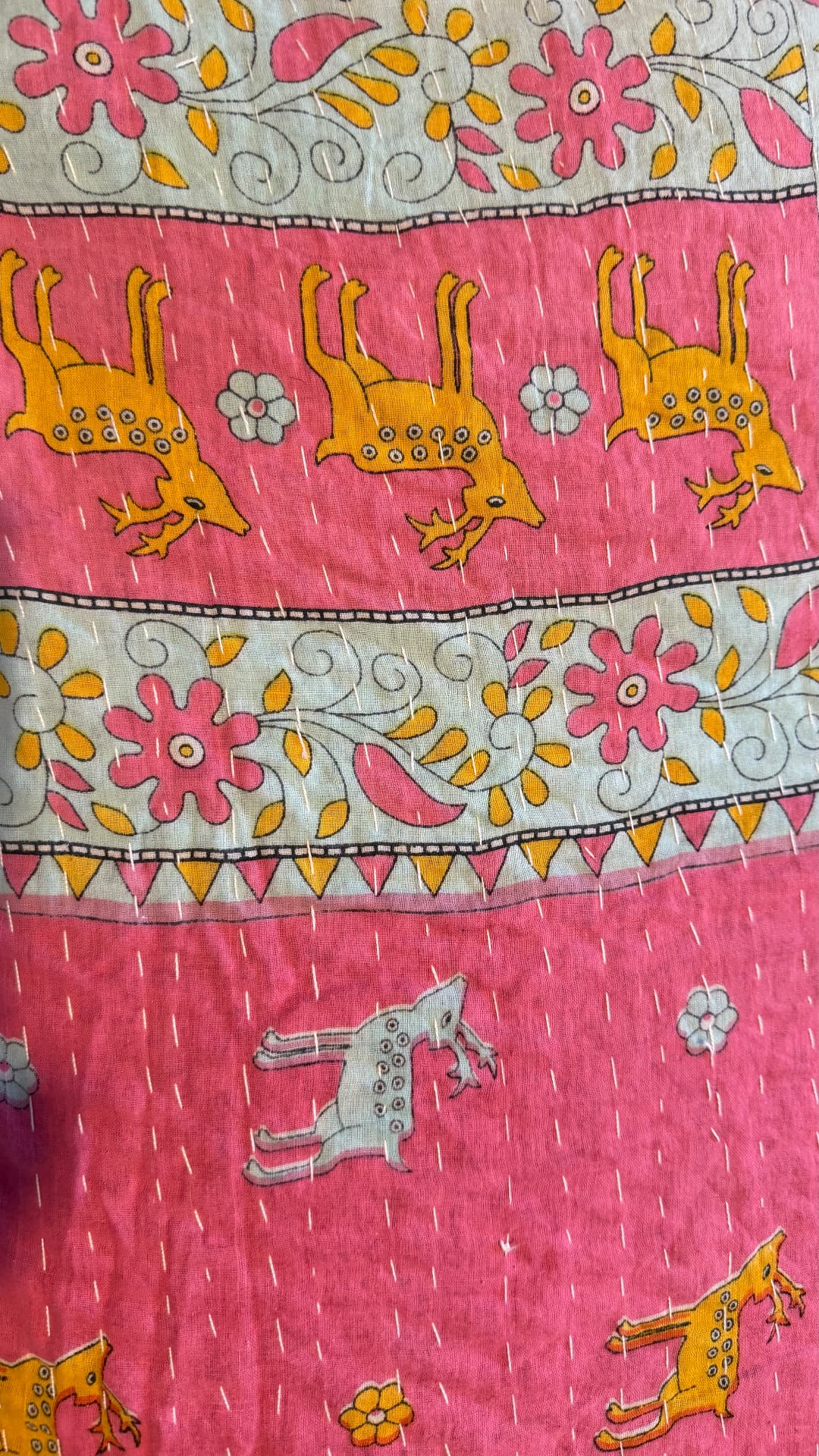
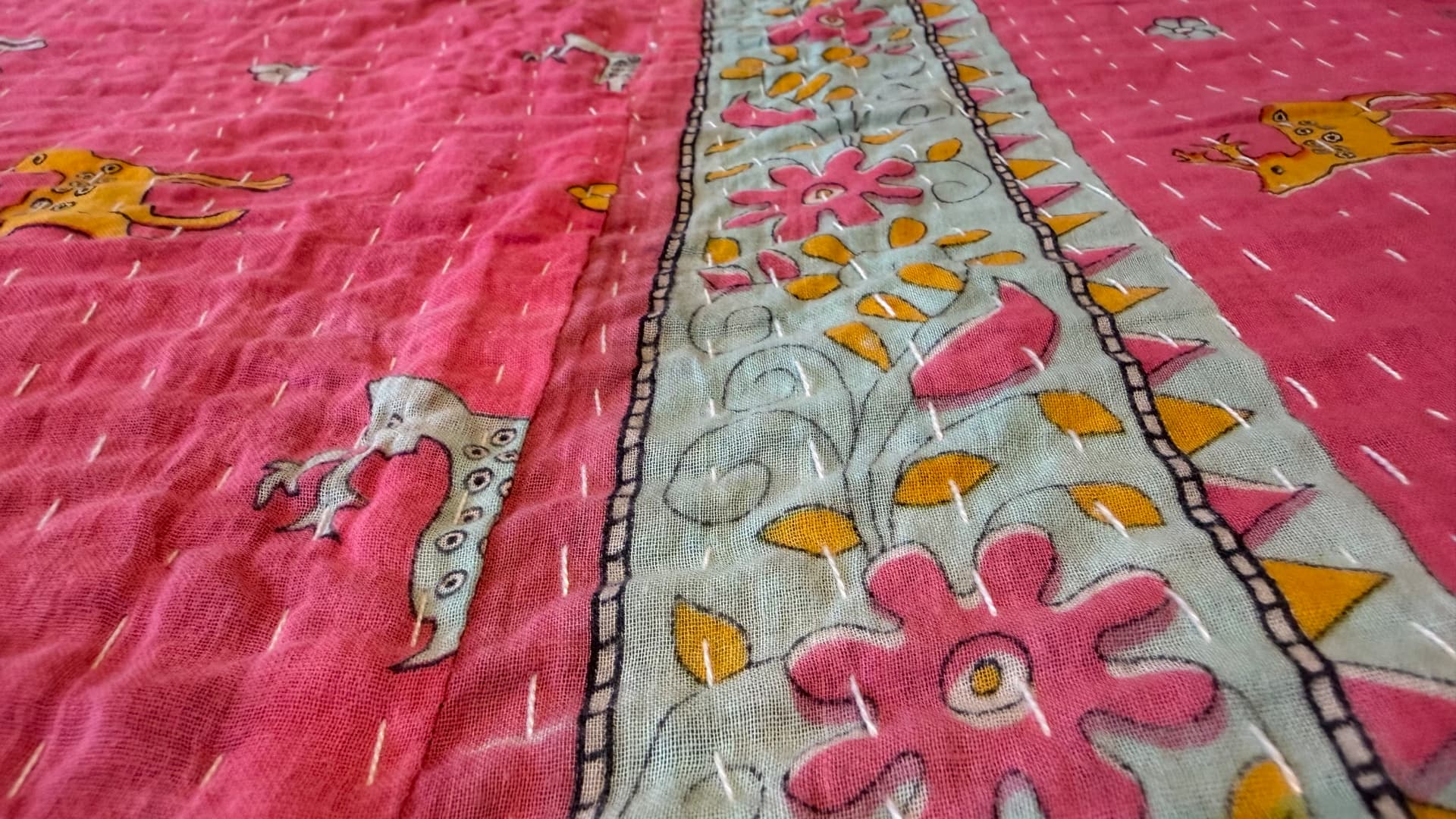
The visible mending is not hidden. It is the point. The stitches cross the surface in rows, in waves, in fields of small marks that record the hours of their making. You can read a Kantha the way you read a landscape: here is where the hand moved quickly, here is where it slowed, here is where the cloth beneath showed through and was allowed to remain visible.
THE QUILT
The large-format Kantha quilt — the size of a bed, the weight of a held breath — is the form most recognized today. Two or more layers of vintage cotton sari cloth, selected for their patterns, their colors, their compatibility and their contrast, are stitched together across the entire surface in rows of running stitch. The result is a textile that is different on each side, that carries the history of its component cloths, and that bears the unmistakable texture of the stitch: a soft, rippled, worked surface that no machine produces.
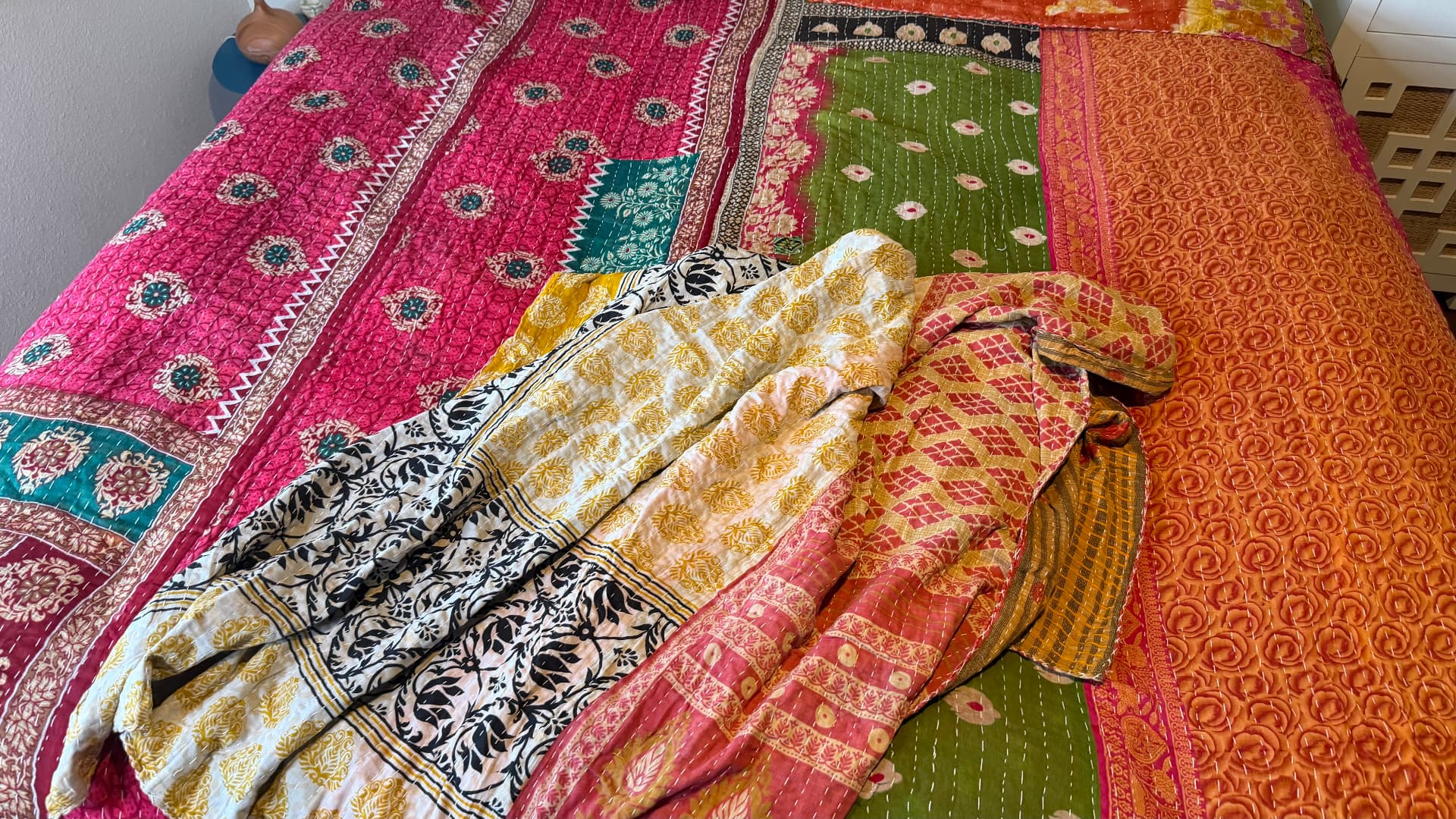
Each quilt is one of a kind. Not because it was designed to be unique, but because the cloth that composes it existed only once, in that combination, in that condition, at that moment. Two quilts may share a pattern. None share a history.
THE LIVING TRADITION
Kantha is not a historical artifact. It is a living practice, carried forward today by artisans — most of them women, most working in rural communities in West Bengal and Bangladesh — who have learned the stitch from their mothers and grandmothers and who now apply it to cloth selected for the contemporary market.
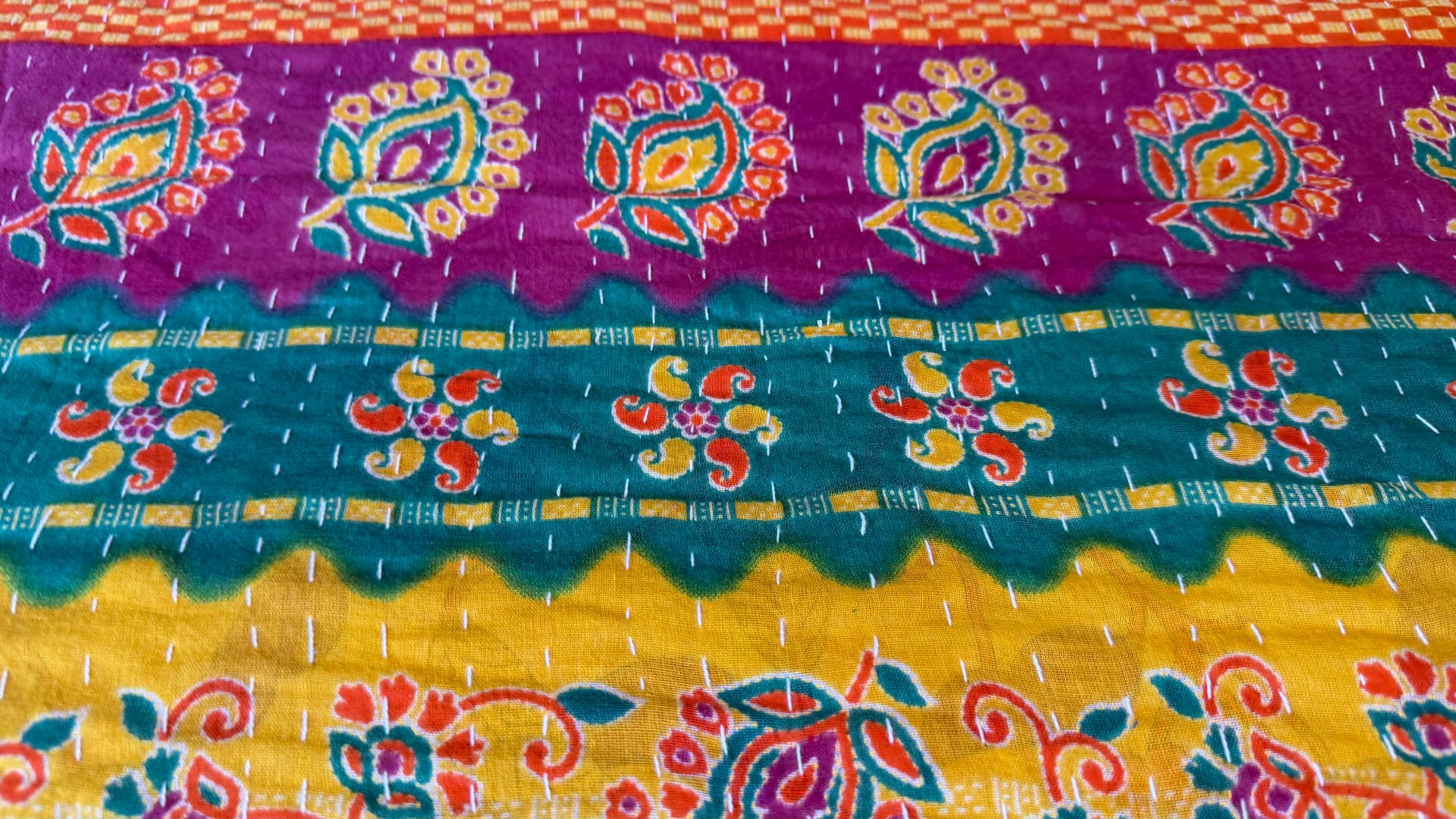
The quilts in this exhibit were made by such artisans. The cloth is vintage sari cotton, selected and paired by eye. The stitching is done by hand, over days and weeks, in the same running stitch that has held Bengali cloth together for centuries. What has changed is not the method but the context: these quilts are made not only for the household but for the world beyond it — for people who may never have worn a sari but who recognize, immediately, the value of cloth that has been touched by time and by hands.
THE ARTISANS
The artisans who make these quilts work in collectives and cooperatives, often in rural areas where this work provides essential income and where the skill is passed between generations. The Institute does not name individual artisans here — not because their work is anonymous, but because the work is collective in the deepest sense: each quilt passes through hands that select, layer, stitch, and finish, and the result belongs to all of them.
What the Institute can say is this: the work is skilled, the materials are chosen with care, and the proceeds from the sale of these quilts return to the communities that made them. This is not charity. It is commerce conducted with respect for the maker — a distinction the Institute considers important, and rare.
THIS EXHIBIT
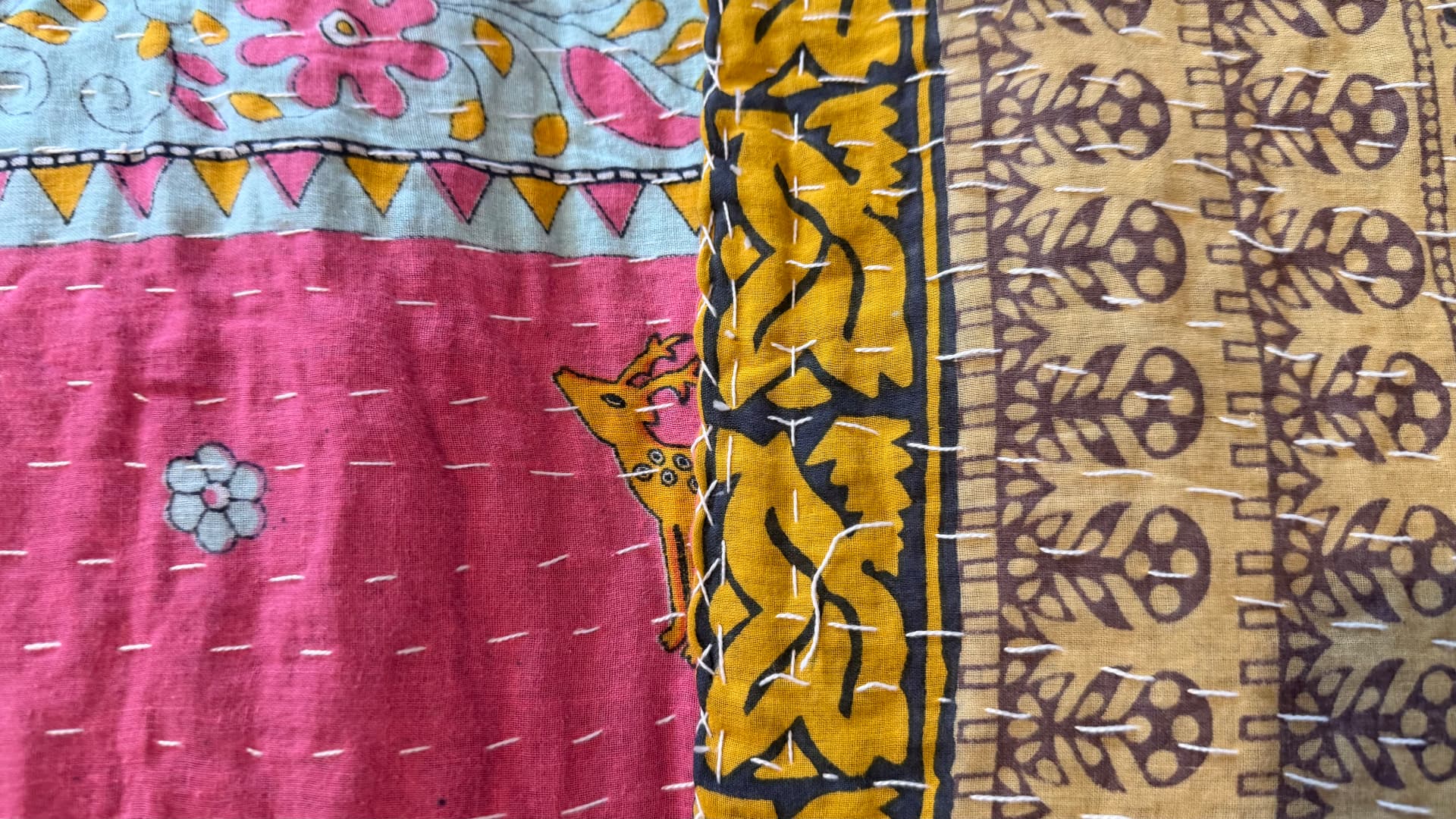
The pieces in this visiting exhibition were selected by Erin Eliko, founder of LivRocks, who works directly with the artisan collectives that produce them. They are presented here not as products but as evidence: that the distance between intention and outcome — the Institute's central subject — can be measured in cloth as readily as in any other medium.
The weaver intended one cloth. Time made another. The stitcher intended a repair. The repair became a composition. The Institute finds this familiar.
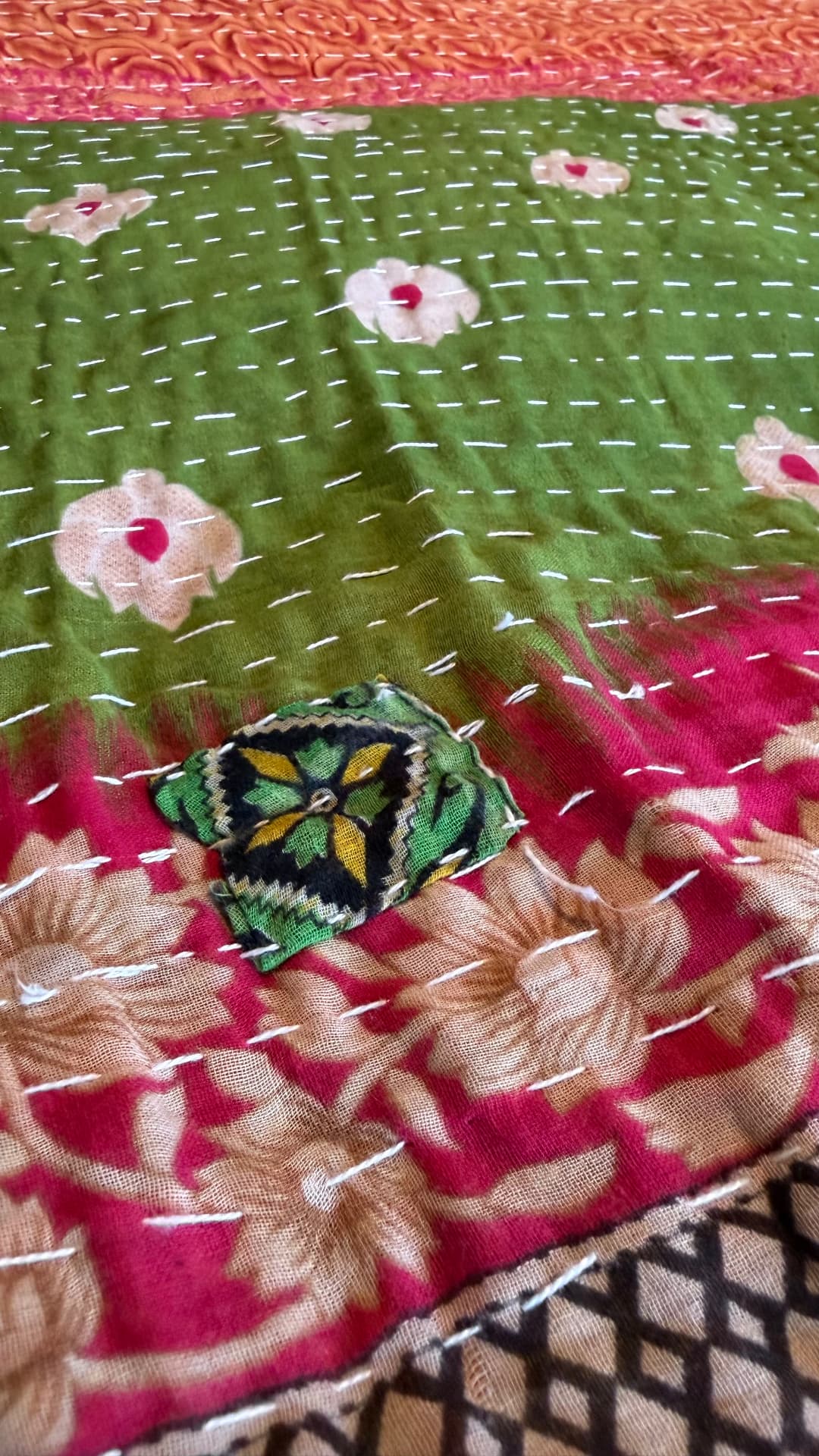
The pieces are also, the Institute acknowledges, for sale. This is noted not as an apology but as a fact, and one the Institute finds appropriately complicating: an object can be both a specimen and a commodity, both evidence and inventory, both art and bedding. Kantha has always known this. It is the rest of us who needed reminding.
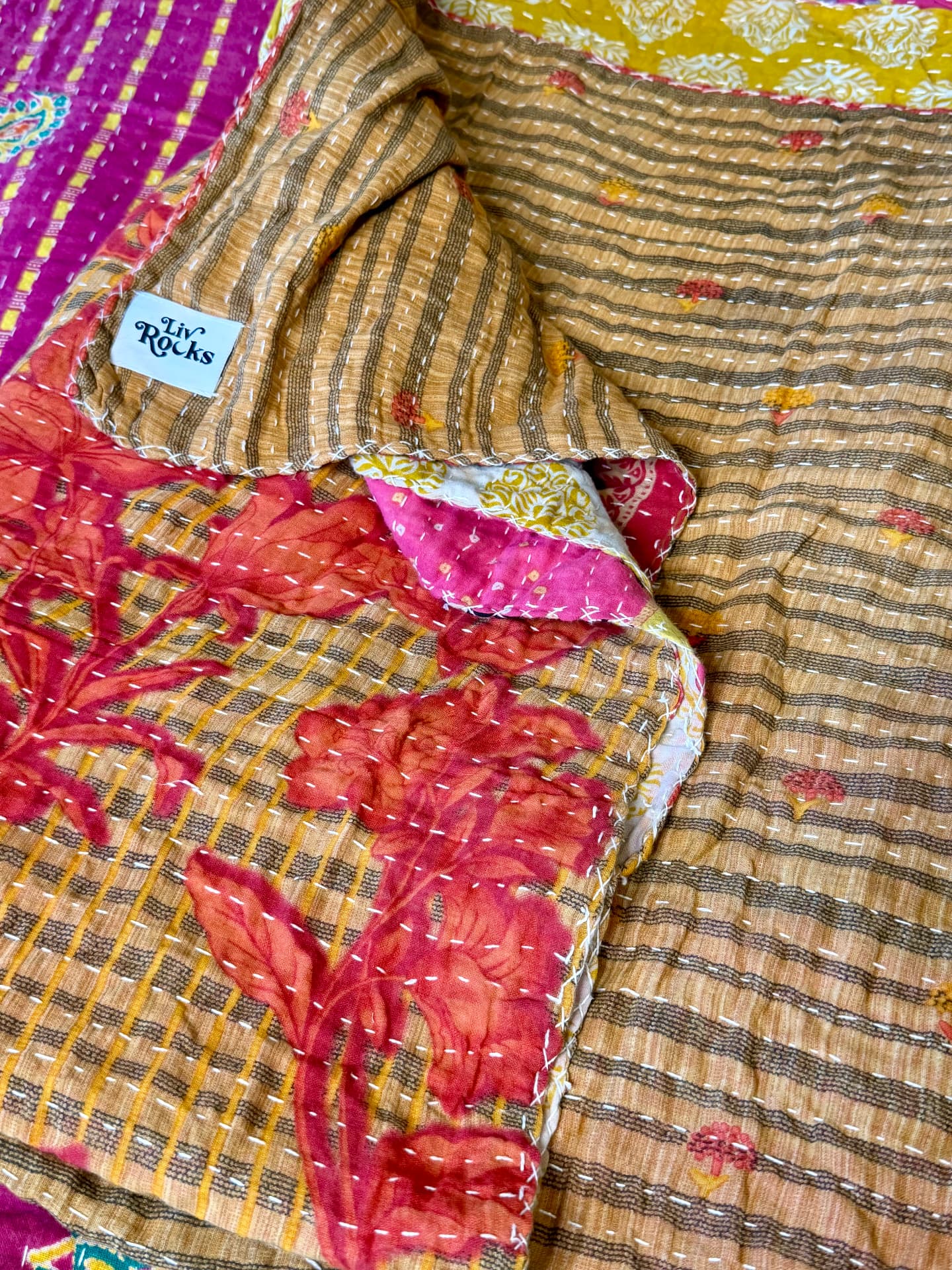
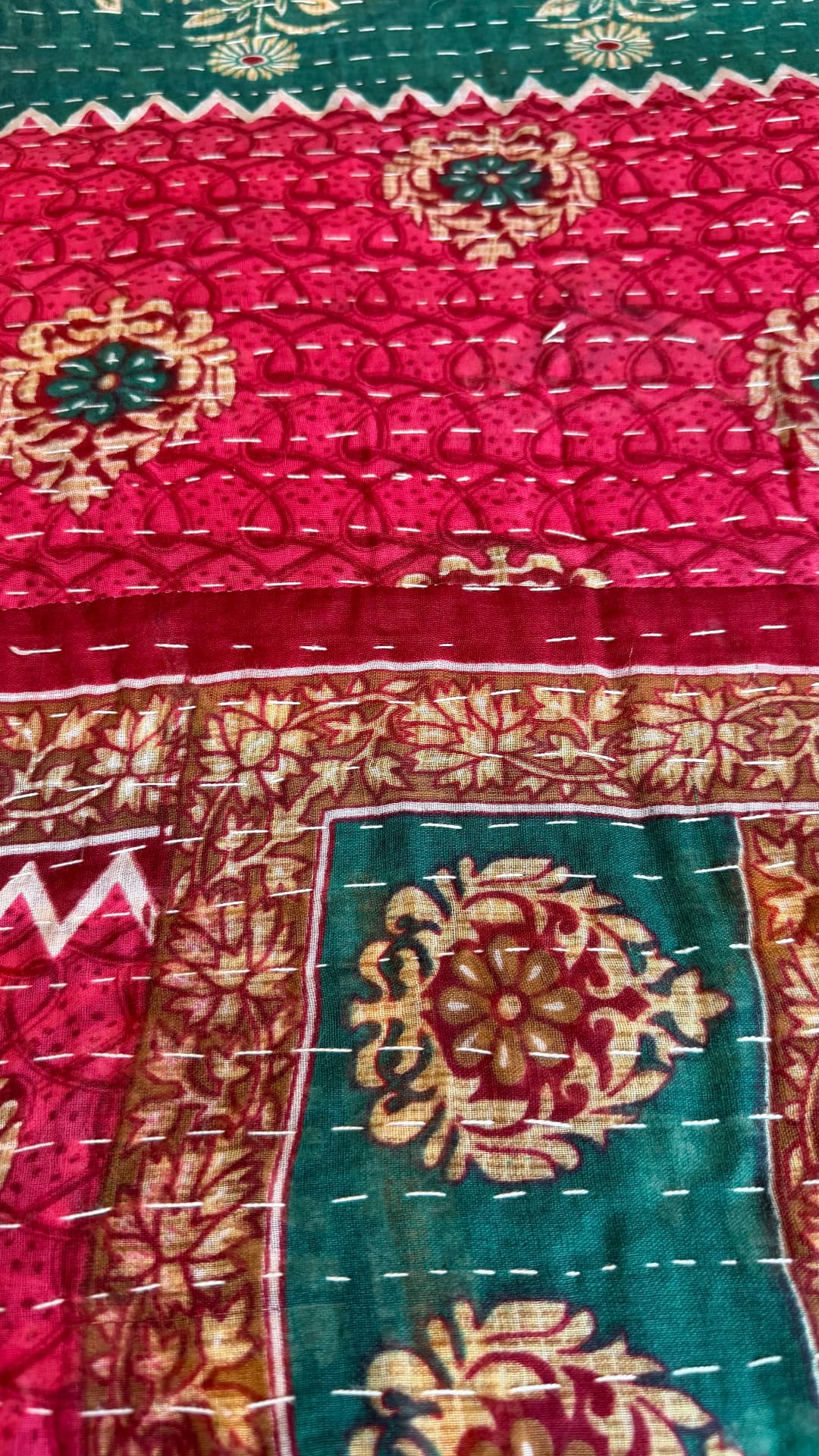
The objects in this exhibit are available for purchase. The Institute finds this complicating.
LivRocks belongs to a friend of the Institute.